
PLOT BUILDING BASICS
The MYSTERY BONES: MOTIVE, METHOD & OPPORTUNITY. These are the Load-Bearing Bones of the Murder Mystery Plot Skeleton.
The MUSCLES: the CHARACTERS.
The TENDONS: the CONNECTIONS between the Characters & the Bones.
The HEART: What Actually Happened
The MIND: What Appeared to Happen
The SOUL: Clues & Red Herrings
THE MYSTERY BONES Reveal Who the Killer Is!
MOTIVE, METHOD & OPPORTUNITY
build a TARGET and show you
who is in the Crosshairs …
They are the core of the plot.
Why did the killer kill?
How did the killer do it?
When did it happen?
Once you know the answer to those questions you are on your way to constructing a whodunnit.

You have as many words as you need to tell your story and not a word longer.
Every word, every phrase has a purpose. If it’s not doing its job, cut it out.
You don’t have to write every day, but do write when the urge is upon you.
Listen to your muse.
Serve the Story that Wants You to Write It.
MOTIVE
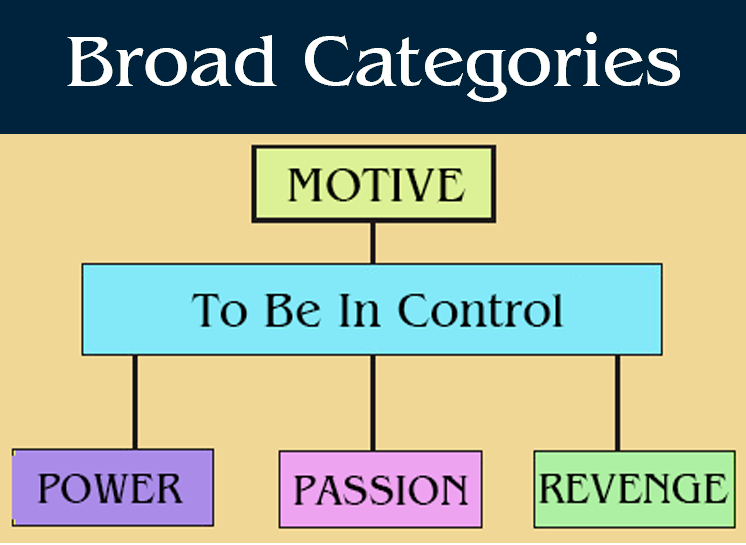
Motive is always about staying in control of something or someone. From there, it breaks down into three broad categories, which then split into sub-categories.
“Where large sums of money are concerned, it is advisable to trust no one.”
Agatha Christie
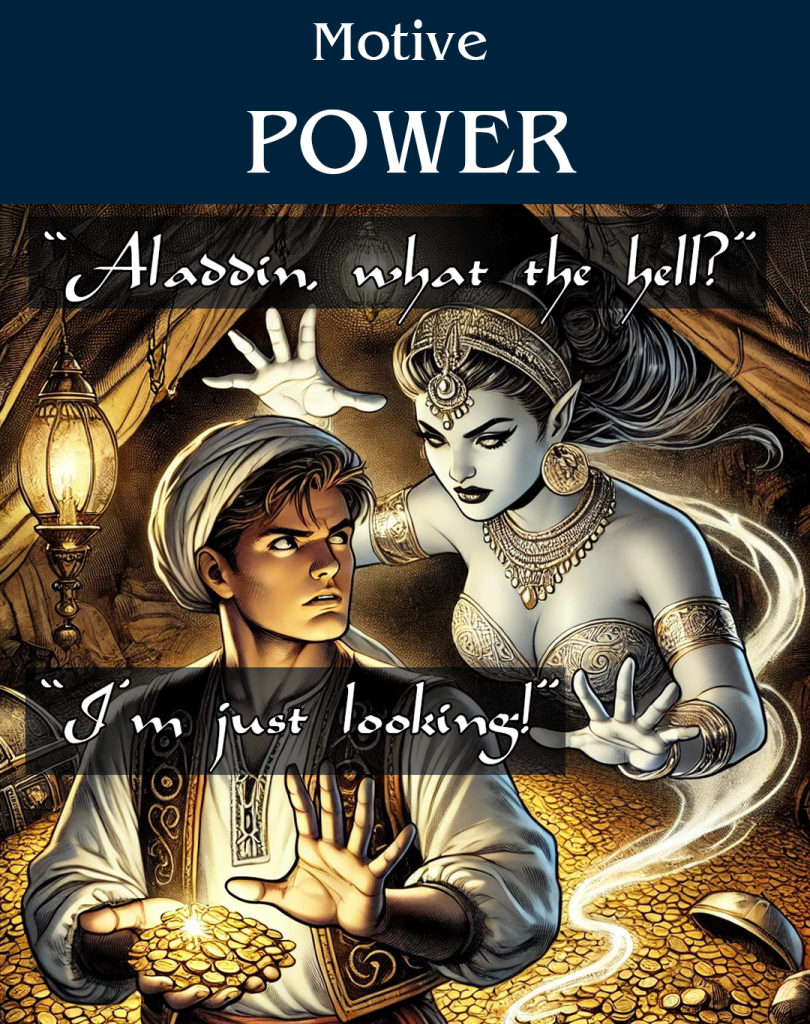
Power: The crime is driven by a desire to gain, maintain, or protect control over people, status, or resources. It can be a declaration of dominance, where the killer asserts authority over life itself, often revealing a deeper terror of losing control rather than a simple hunger to possess it.
“Once something is a passion, the motivation is there.“
Michael Schumacher
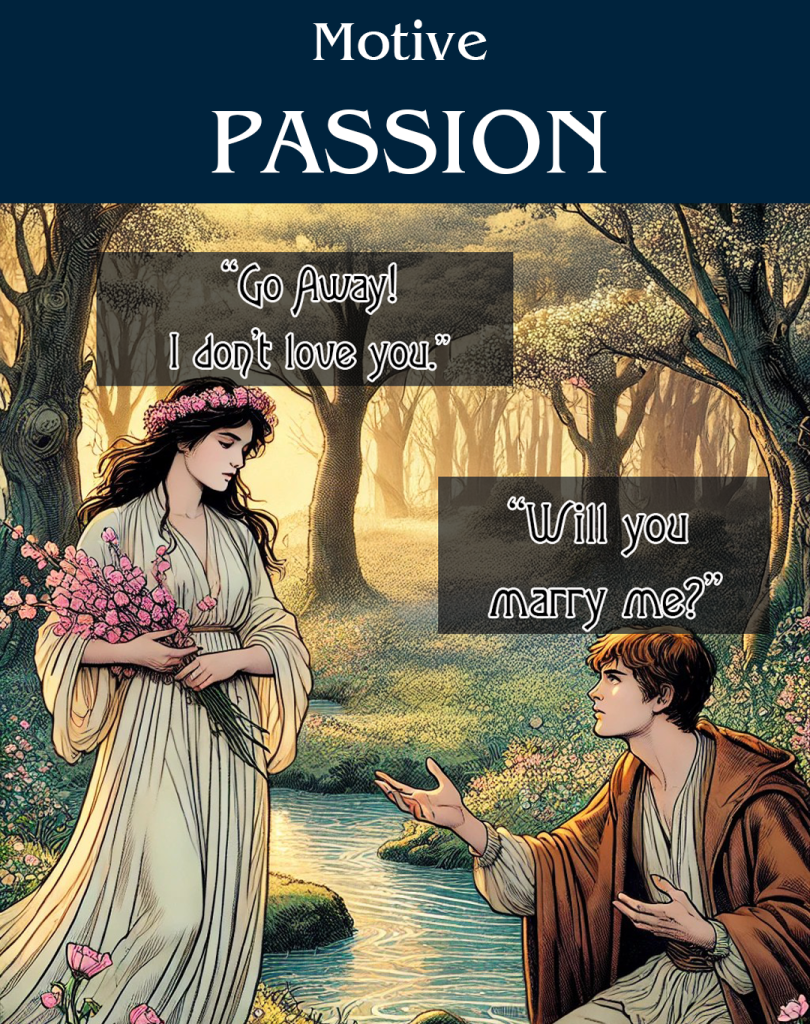
Passion: Passion as a motive for murder is driven by emotional overwhelm – erupting from unrequited love, jealousy, obsession, or rage—overriding reason and restraint. It explodes from a moment or accumulation of time, when extreme feelings eclipse judgment, making the crime feel immediate, personal, and impossible to take back.
“Life being what it is, one dreams of revenge.”
Paul Gauguin
Revenge: Revenge as a motive for murder is fueled by the need to correct a perceived wrong, to make suffering answer suffering. It transforms pain into purpose, where the act is not just about harming another, but about restoring a sense of balance—even if that balance is deeply distorted. It creates a chilling clarity of intent, while still allowing the character to see themselves as justified.
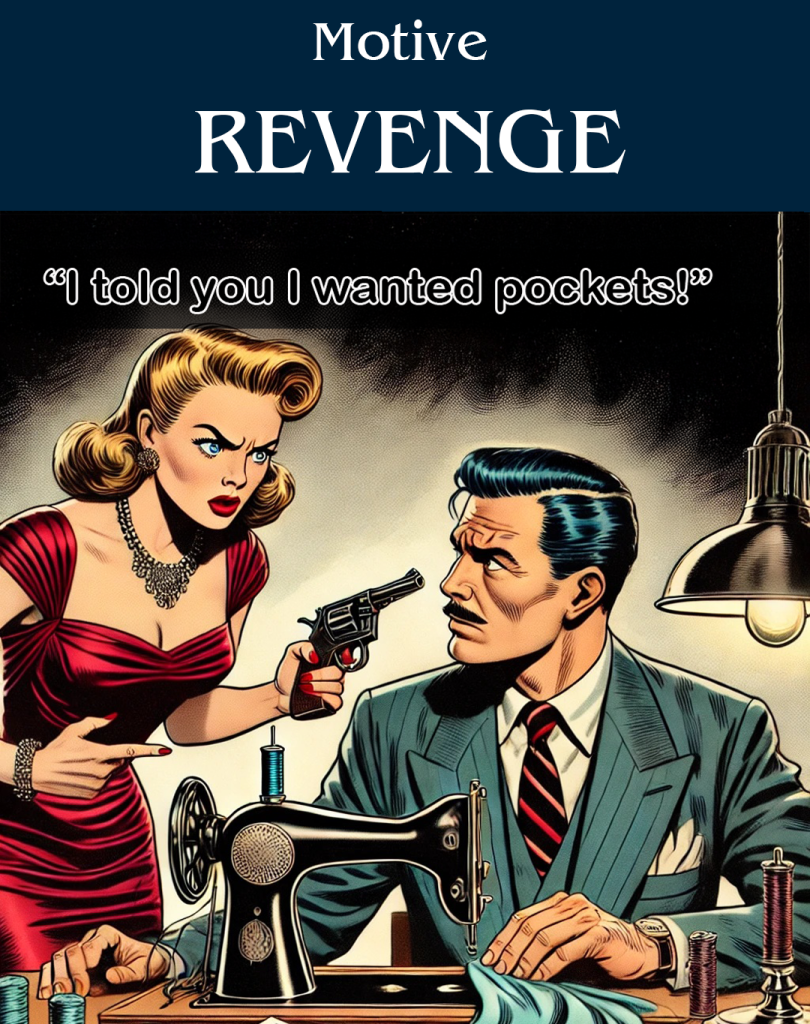
In mystery stories, many characters may have a motive.
They may or may not remain as suspects throughout the whole book. They can be ruled out as it is revealed whether they also had the method and the opportunity to be the villain.
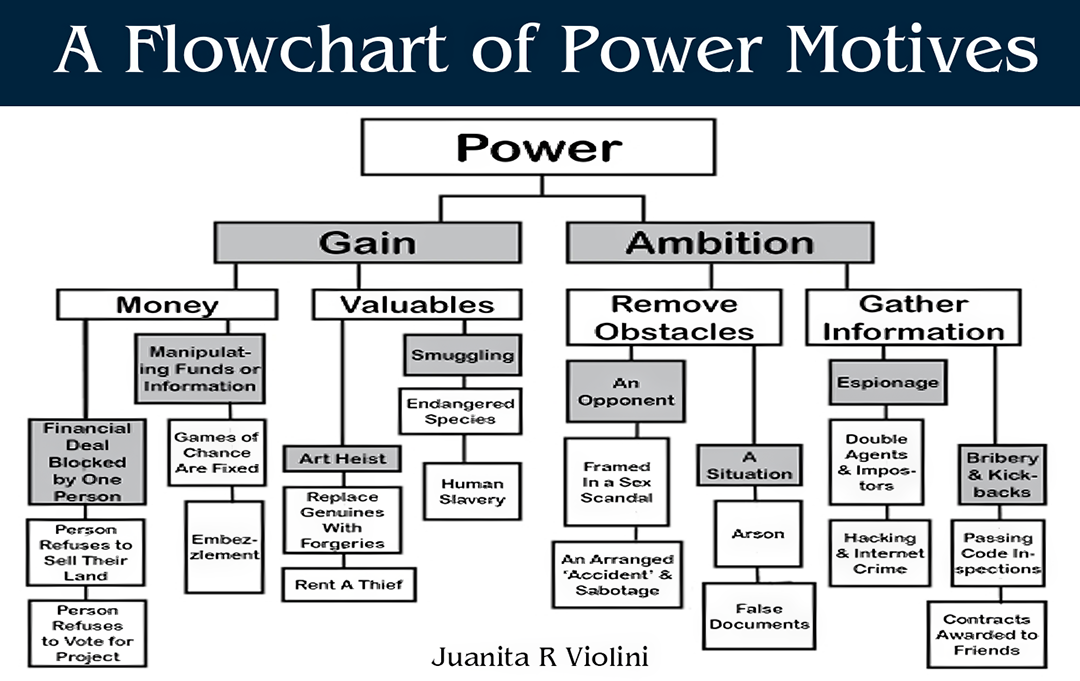
I have created three different flow charts; one for each kind of motive.
The one above is for Power.
The charts for Passion & Revenge are included in my book CLUE TRAIL.
For every MOTIVE you need a PIECE of EVIDENCE, a way to find that evidence and an explanation of how your protagonist understands what it means.
If you are writing mystery entertainment, present EACH CLUE TWICE.
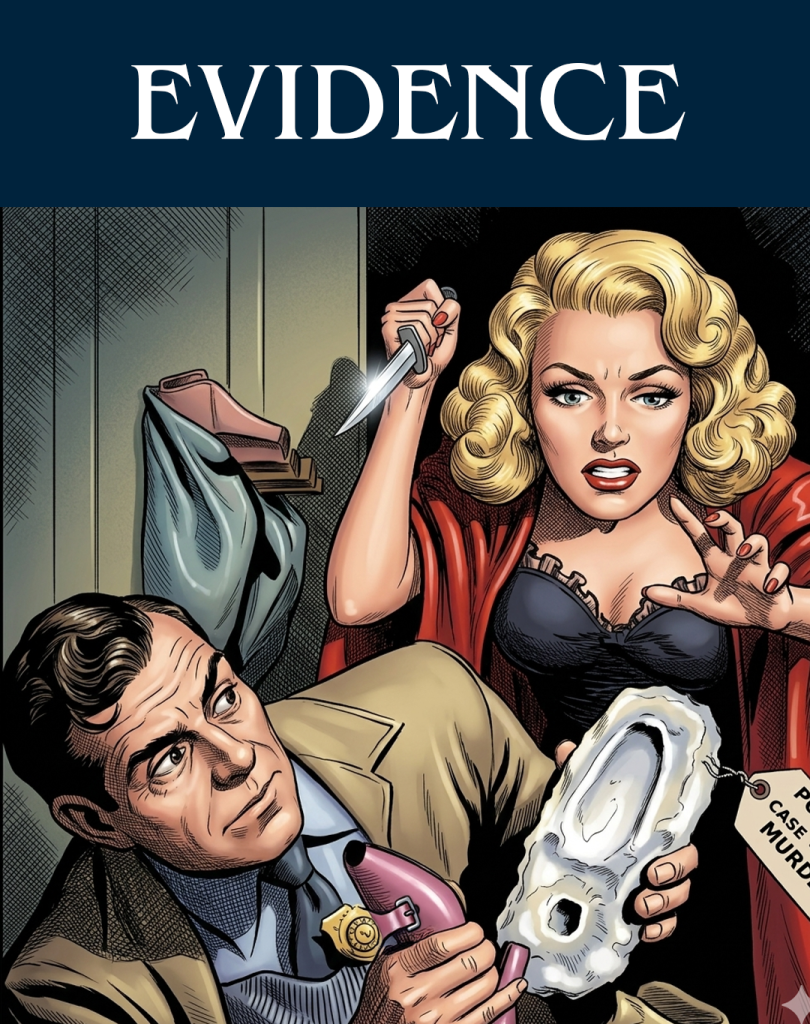
IN SCRIPTS: Clues should be presented in two ways. One way is spoken in a scripted scene on mic or in improv as the actors work the tables. And a second way as something physical; a prop or piece of hardcopy. Presenting the evidence in two different ways ensures that everyone in the audience has a chance to solve the mystery, even if they didn’t hear the clue.
IN BOOKS: Clues have two parts. Part one is when the clue is found. Part two is when the protagonist or detective understands what it means.
Midnight at the Oasis Character Motives:
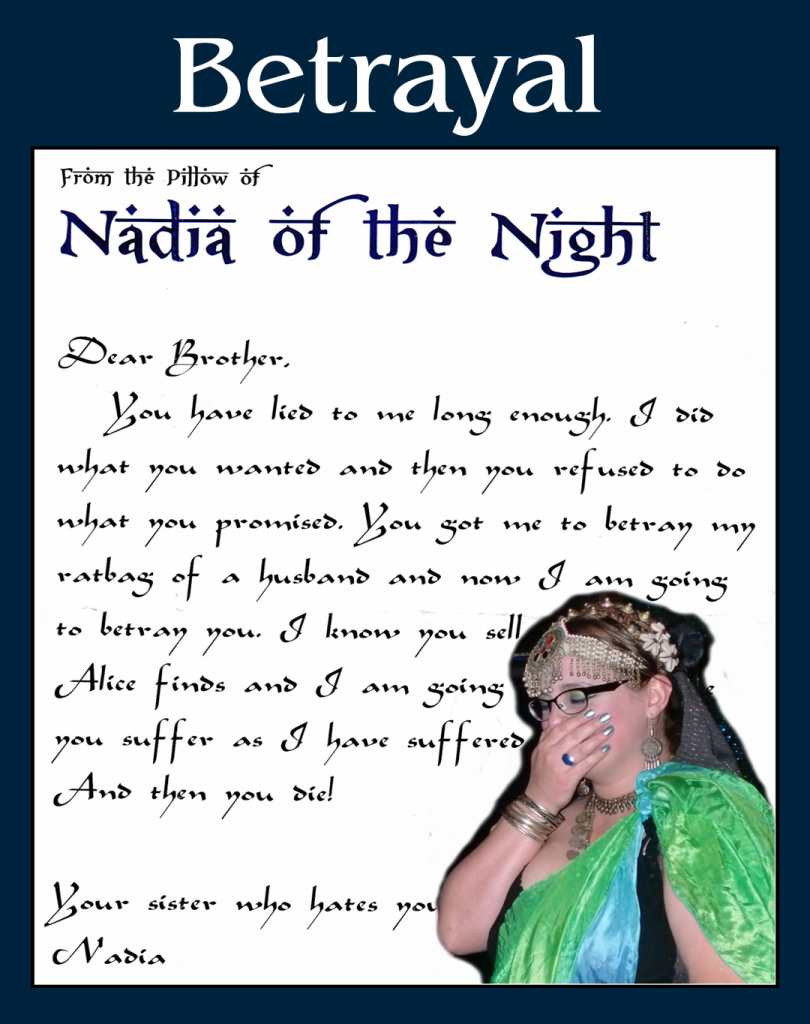
Nadia of the Night – Betrayed by the Sultan
Sheikh of Shazam – Betrayed by the Sultan
Betrayal as a motive cuts deeper than most because it comes from a broken bond—trust turned inside out. It is born out of passion rather than power or revenge. The crime is driven by a personal rupture: loyalty violated, love corrupted, or allegiance abandoned, making the act feel both intimate and emotionally charged.
Sheikh of Shyster – Blackmailed by the Sultan
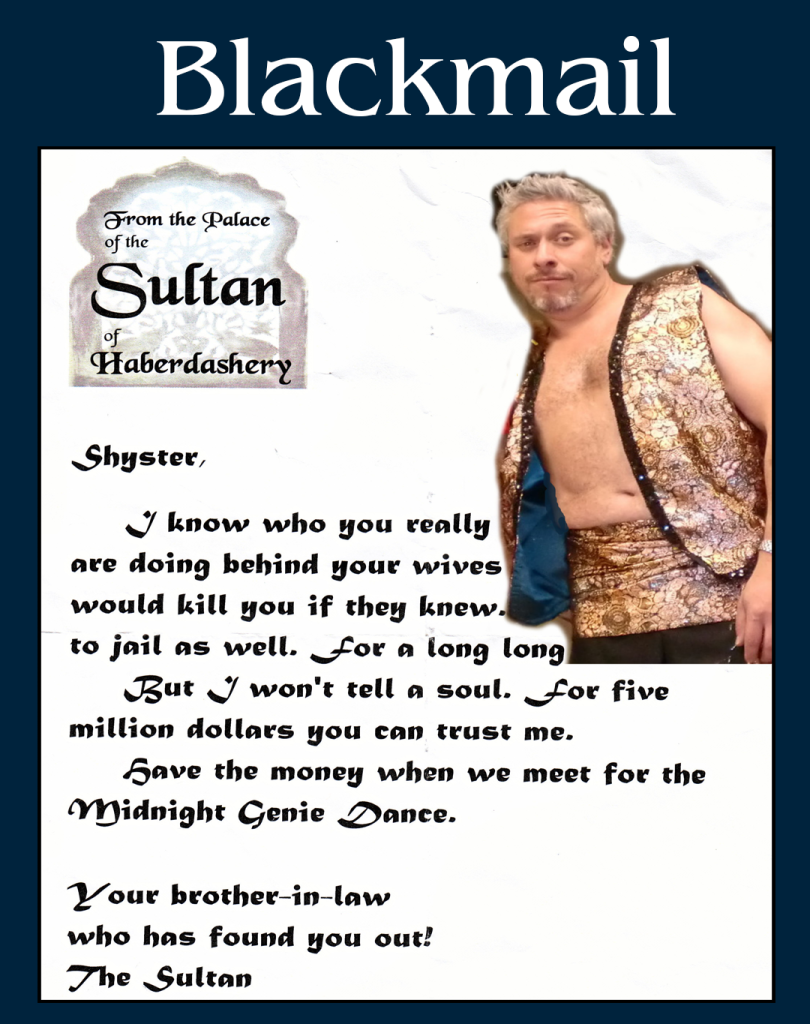
Blackmail is a motive built on the pressure of power rather than passion or revenge —it forces action through fear of exposure. It’s especially powerful in mystery because it creates a chain of shifting power: today’s victim can become tomorrow’s perpetrator. Blackmail naturally breeds layered deception, since every character connected to the secret has something to hide—and something to lose.
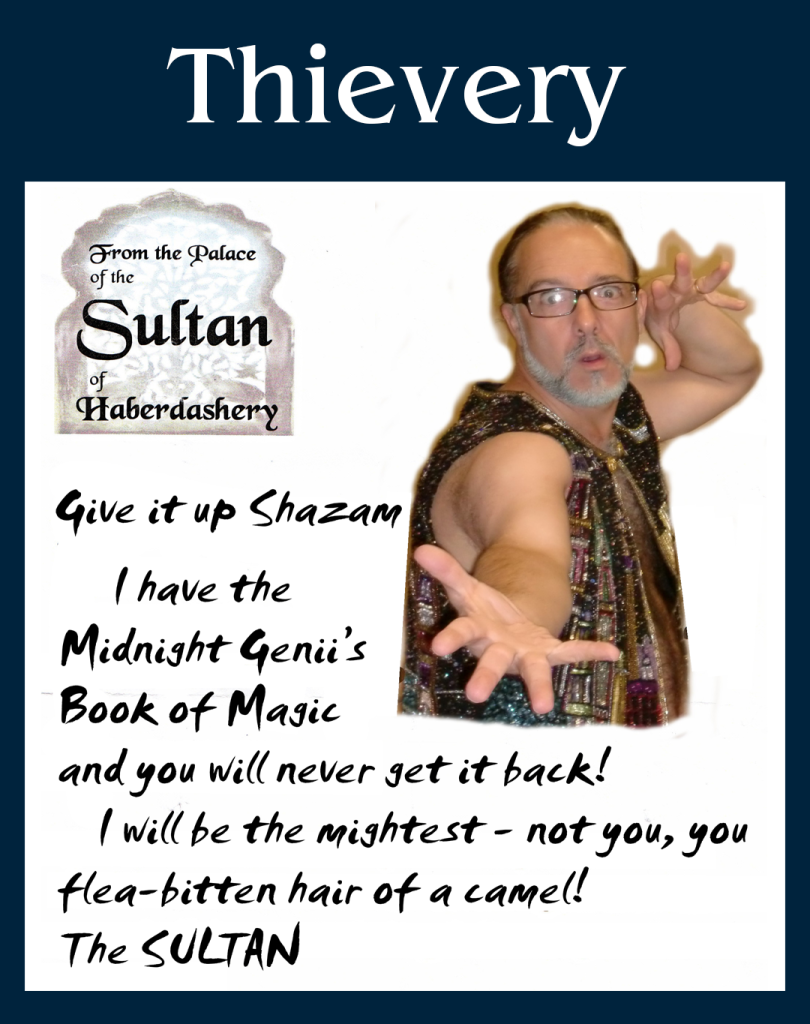
Sheikh of Shazam – Robbed by the Sultan
Thievery is a motive of revenge. It carries a dangerous momentum: reclaiming the object is never enough, so the act escalates into something larger, darker, and more personal. It blurs justice and vengeance, transforming a wronged victim into an aggressor—and making the final crime feel both inevitable and tragically self-justified.
Samira of the Sunset – Cursed by the Sultan
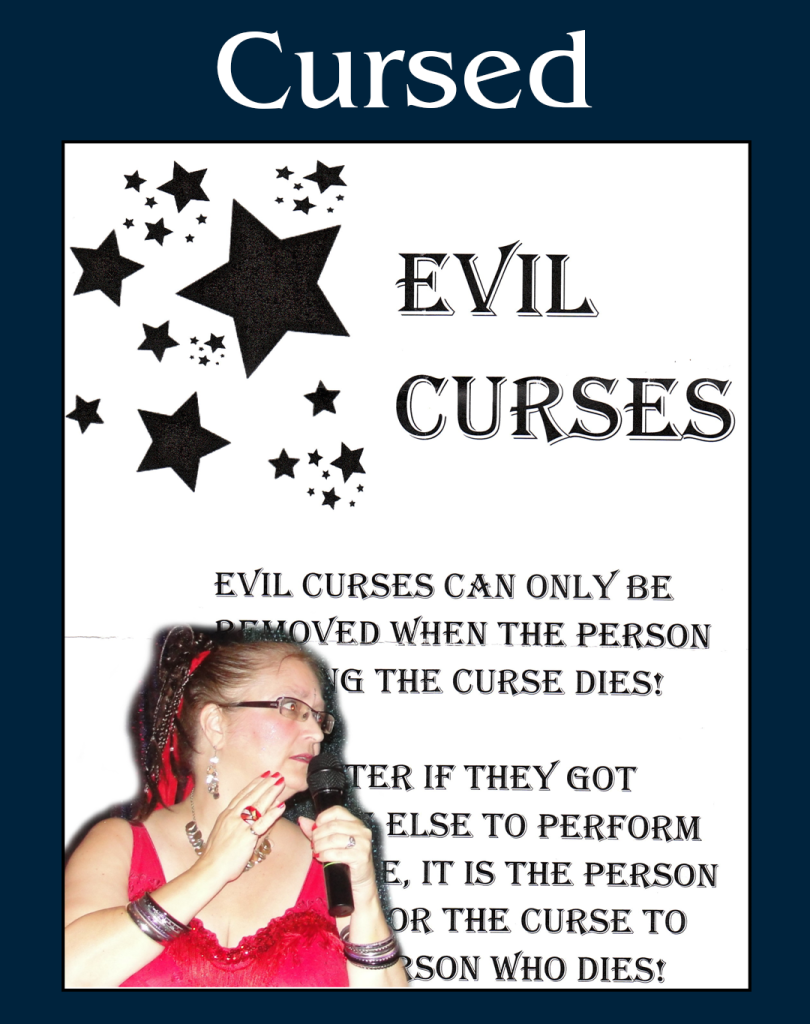
Being cursed as a motive operates on belief—whether the curse is real or imagined, the character acts as if they are under its control. The crime becomes driven by fear, fatalism, or the need to break (or fulfill) the curse. It’s blurs the line between rational and irrational explanations and can misdirect both detective and audience into looking for supernatural causes when the truth may be entirely human—or disturbingly ambiguous.
“As a rule,” said Holmes, “The more bizarre a thing is, the less mysterious it proves to be. It is your commonplace, featureless crimes, which are really puzzling; just as a commonplace face is the most difficult to identify.”
Arthur Conan Doyle
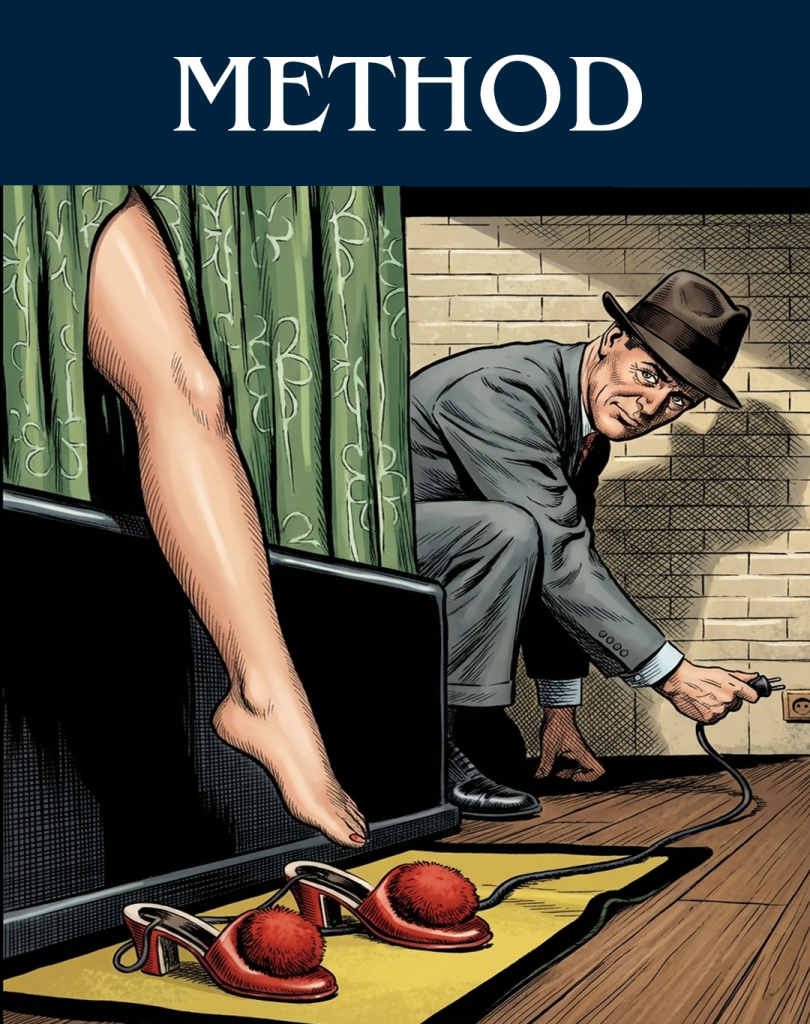
The method must match the time and place in which the crime occurs as well as matching the murderer’s personality and their motive. Are they brash or timid? Is it personal or business?
“There is nothing quite so good as a burial at sea. It is simple, tidy, and
not very incriminating.”
Alfred Hitchcock (English Film Director, 1899 – 1980)

“Opportunity may knock only once, but temptation leans on the doorbell.” — Anonymous
Opportunity in a murder mystery isn’t luck—it’s logistics. Who could get in, who could get out, and who knew the one moment no one would be looking. Opportunity is the part no one argues about. Motives are messy, alibis can be faked—but someone either had the chance to do it, or they didn’t.
Most people look for motive first. The smarter ones start with opportunity—because it’s the one thing the killer couldn’t afford to get wrong.
Thanks so much for helping us align the motive, opportunity and methods to keep the readers guessing – great system!
This was really entertaining and useful. Thanks so much for sharing. I got a LOT of ideas generated from this. Much thanks
Hey say more! What was most useful.
wow your article was very help full maybe now i can finally get that mystery story writen .
Thanks Gwen – let me know if you have any questions! Always love to talk mystery.
I’m looking forward to seeing what they come up with! It was great meeting you. Teachers rock. Call anytime.
Thank you!! I truly enjoyed the “Mystery Writing” Workshop on March 23, 2013. I am excited to teach my students “the bones” and I would love to share their work with you once completed. We are going to start the 2nd week in April so expect a possible call as I may need your assistance. Again, I certainly got what I wanted from the course as you made it interesting and easy to follow.