THE CRIME SCENE NEXUS
What Is the Function of the Crime Scene in a Murder Mystery?
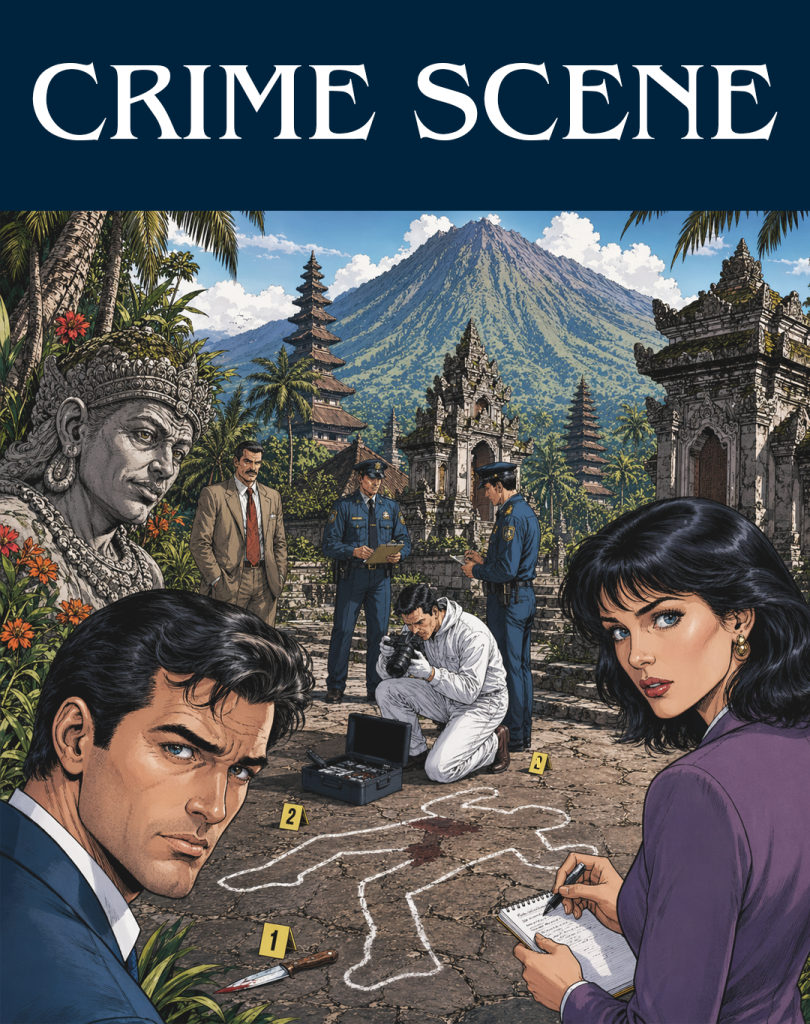
- The crime scene is the first working piece of the mystery: it presents the apparent story while concealing the truth, giving the detective—and the reader—a structured starting point for investigation.
- The crime scene is the physical location where a murder (or apparent murder) has taken place or has apparently taken place.
- It functions as a source of evidence, atmosphere, and narrative tension from which the investigation unfolds.
- It starts misdirection by focusing attention on what appears to have happened and avoiding what actually happened.
- A specific, well-defined crime scene creates a strong foundation for the mystery.
- A vague crime scene leads to a vague and unfocused investigation.
- It is both a real place and a narrative device—it must do story work, not just act as set decoration.
- It is constructed by the killer, interpreted by the detective, and experienced by the reader, with all three perspectives operating simultaneously.
What Is a Closed Location in a Murder Mystery?
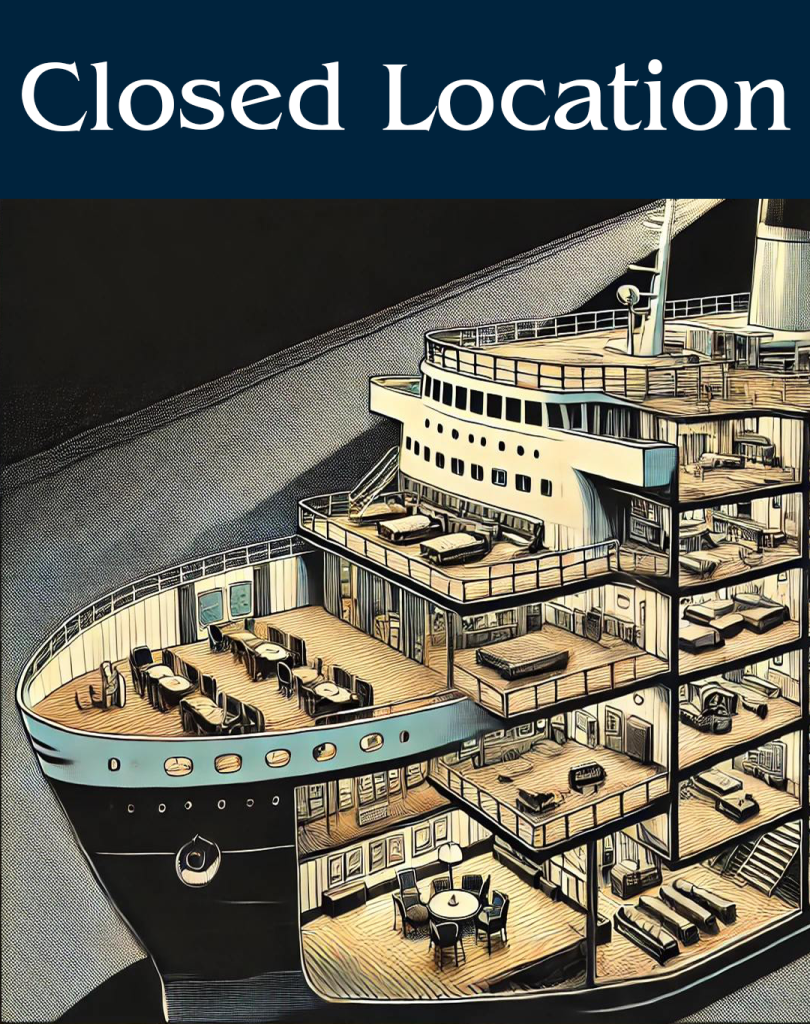
A closed location is a contained setting where the number of suspects, entrances, exits, and opportunities are limited.
- A country house
- A train
- A remote island
- A snowed-in hotel
Choose a closed location when you want:
- A tight puzzle.
- A limited suspect pool.
- Strong pressure between characters.
- A contained timeline.
- Secrets trapped in one place.
- A mystery driven by opportunity and contradiction.
- Secrets trapped in one place.
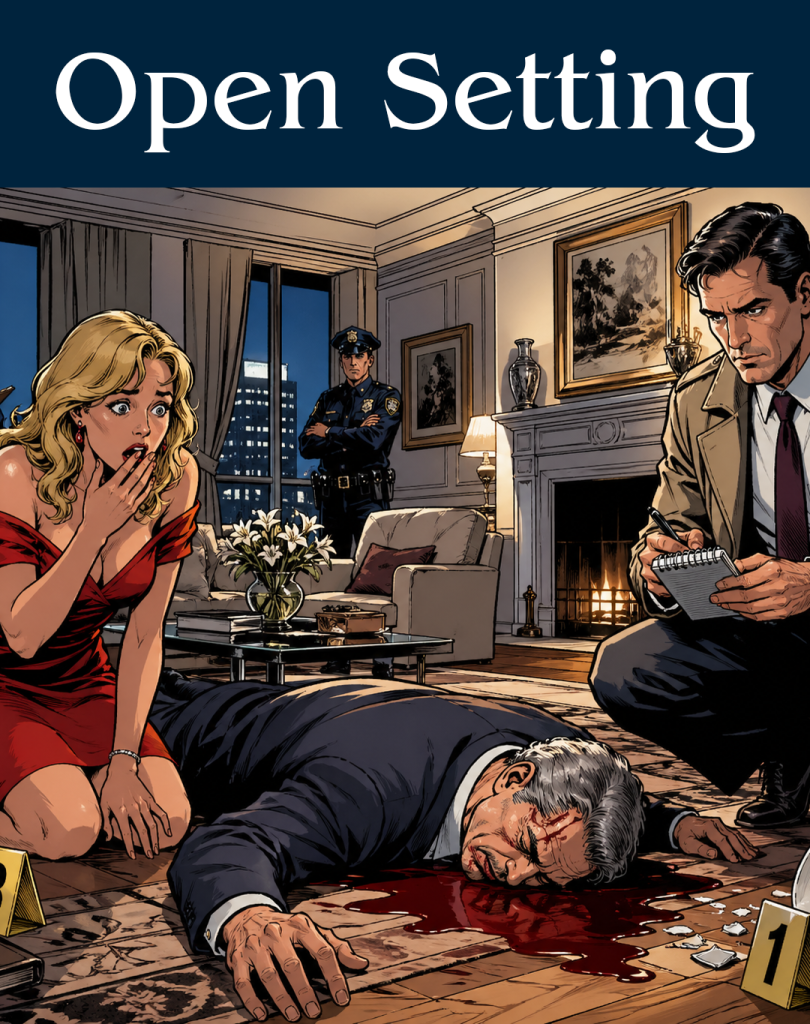
What Is an Open Setting in a Murder Mystery?
An open setting is a broader, less contained location where many people may have access to the victim, the crime scene, or the evidence.
- A public park
- A festival
- A hospital
- A wilderness trail
Choose an open setting when you want:
- A broader investigation.
- Public confusion.
- More witnesses and false leads.
- A larger world around the crime.
- A mystery driven by filtering, verification, and pattern recognition.
The best choice depends on the kind of story problem you want the crime scene to create.
Why Set a Murder During a High-Stakes Occasion?
A high stakes occasion or event gives a murder mystery a predictable structure to disrupt: a guest list, a schedule, a public purpose, and high-stakes tensions; both obvious & hidden. Because everyone is expected to behave a certain way, the writer can use small inconsistences (someone leaving early, missing a toast, changing seats, avoiding a photo, or appearing where they should not be) and build them to escalating outbursts (aggressive confrontations, the appearance of a weapon, etc) – as clues, lies, or red herrings.
Local Fundraiser
One project I was involved in was a fundraiser for the community arts and culture centre and the local belly dance group.
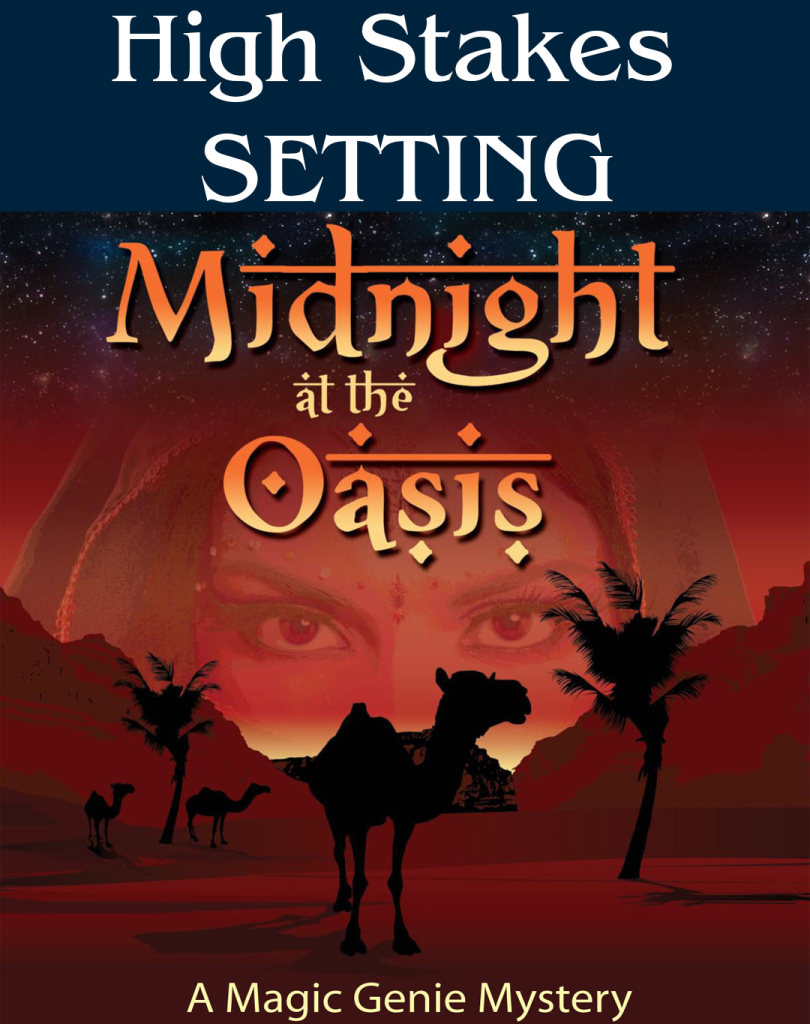
With a combination like that the title ‘Midnight at the Oasis‘ immediately popped into my head. After a week of thought and trying things on I made up my own tale out of the
Arabian Nights and set about using that as the raison d’être.
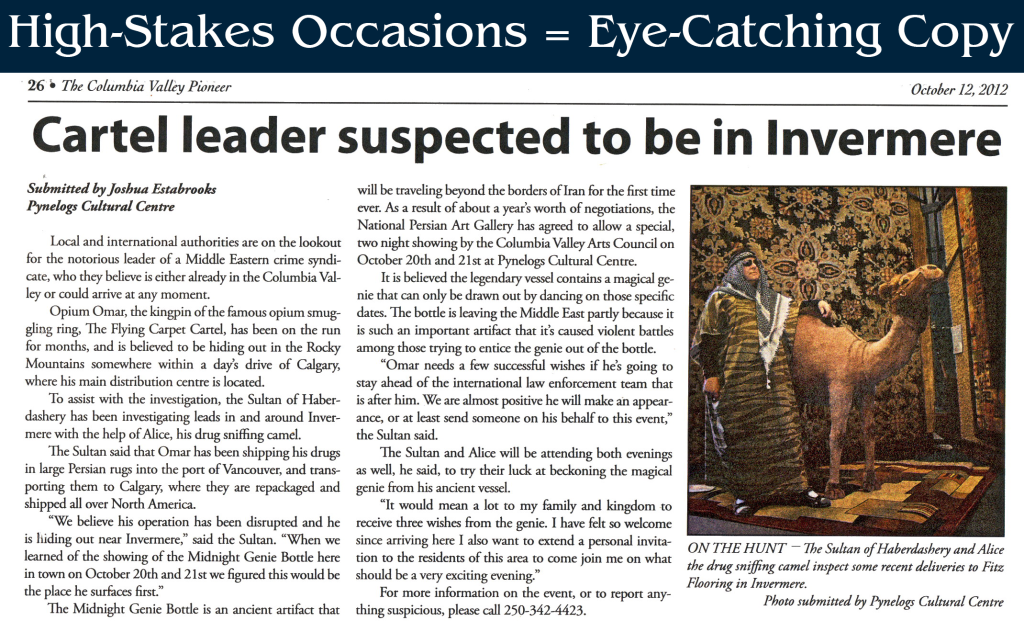
The high-stakes event was if you could entice, with your dancing, the Midnight Genie out of his bottle … he would … GRANT YOU THREE WISHES! Who wouldn’t want that? Who would kill for it?
The MIDNIGHT GENIE is in town. But so is Opium Omar. The stakes just got higher.