What Happened?
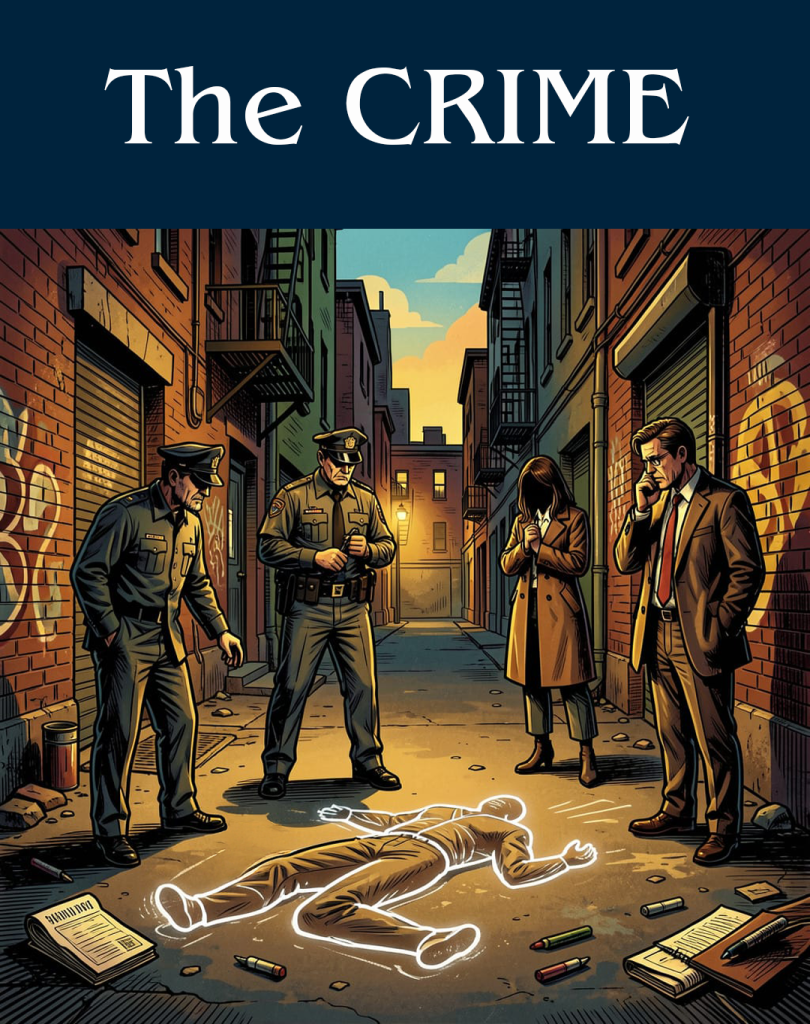
How do you design a murder that is effective, believable, and solvable in a mystery novel?
- Complexity and Puzzling Nature: Design the crime scene to show and hide at the same time.
- Relevance to Plot and Theme: Align the murder with the story’s plot and underlying theme
- Clue Potential: Ensure the murder generates a fair and traceable clue trail
- Unique or Unusual Aspects: Introduce a distinctive or unusual element that sets the crime apart
- Emotional and Psychological Stakes: Define a clear motive that logically drives the crime
Digging Up the Dirt to Find a Crime or Where Do You Get Your Ideas?
Ideas are lurking everywhere. They are hiding in plain sight. Stories are found reading between the lines of other stories.
- Rumours & Gossip in the work place or the play ground
- Eavesdropping in coffee shops & wine bards
- From you own experience
- Pet peeves taken to an extreme
- The news, including headlines, police reports, forensic science journals, & psychological studies
- Art & Literature events
- Historic events
- Folklore & urban legends
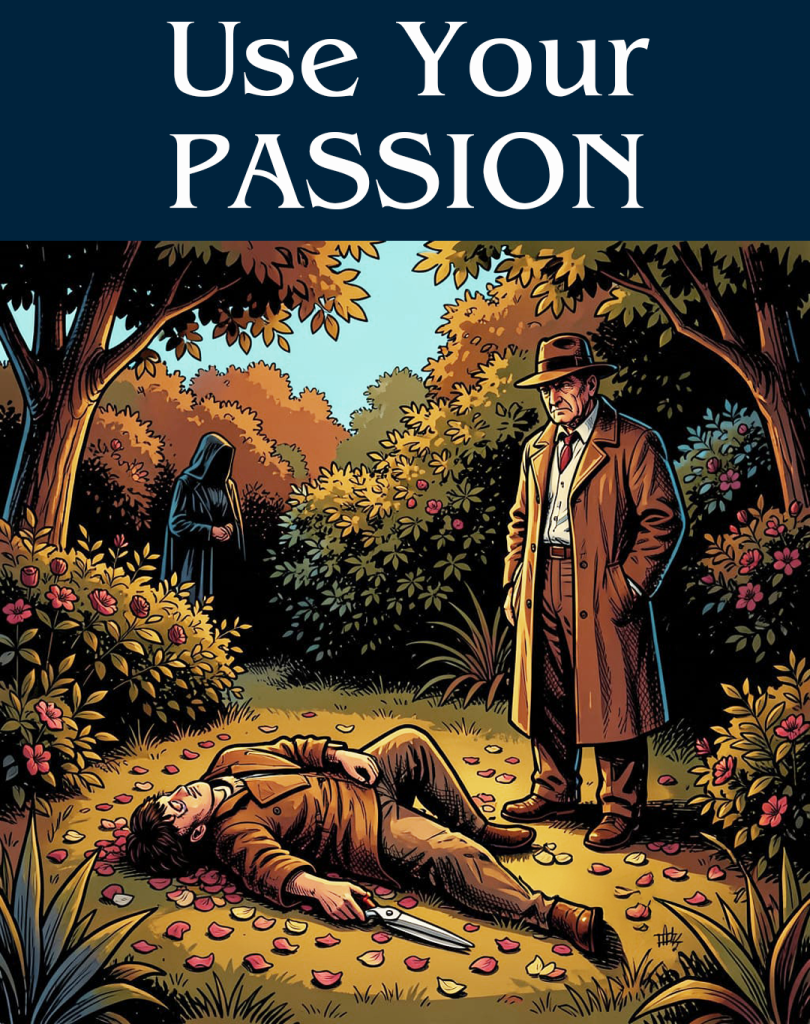
Write about something you feel strongly about. It may be an injustice. It may be a dream. It may be a hobby.
Say you really love to garden.
Research interesting stories about gardening. A quick search gave me this piece of FOLKLORE:
In 2019, gardening enthusiasts in Dorset, England, unearthed a prehistoric treasure trove – then things took a strange turn —plants growing unusually fast, odd sensations of being watched, and whispersof “the haunted garden,” blending history with mystery.
This bit of research could inspire a murder mystery novel or script.
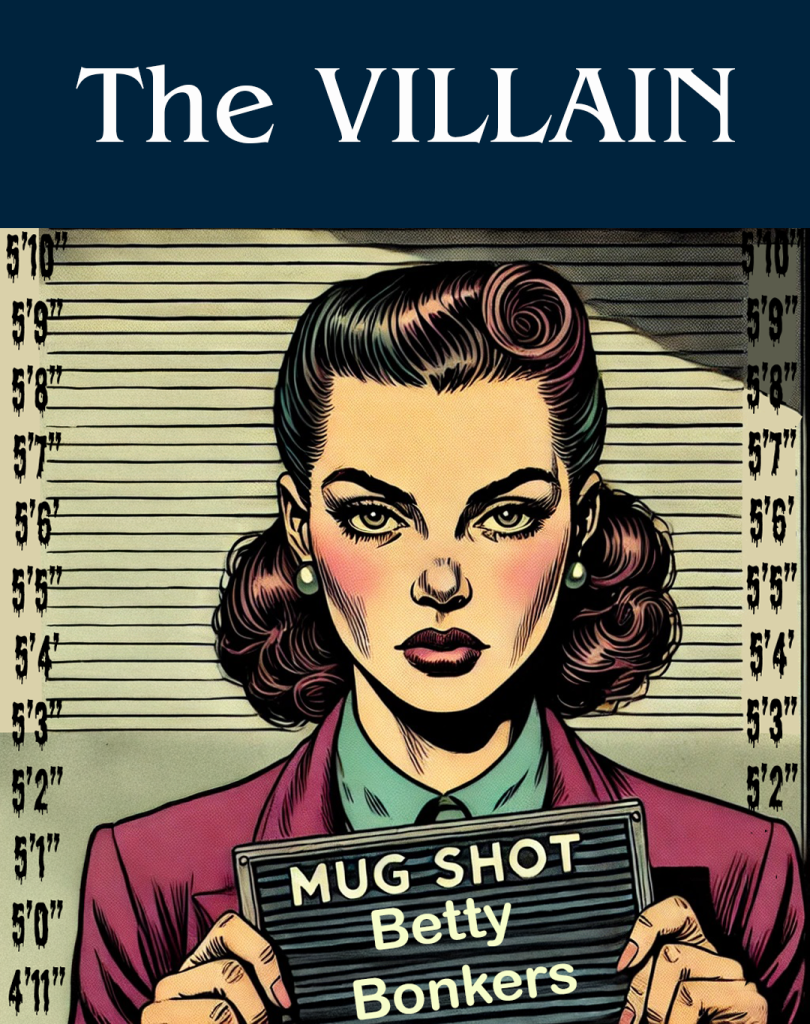
WHAT MAKES A GOOD VILLAIN?
The Crime comes from an Obstacle to the Villain’s Desire. Who or what is stopping them from having what they want. What is their MOTIVE?
- A good villain has a clear, logical motive and belief system.
- A good villain targets the protagonist’s weakness, not just their safety.
- A good villain drives the story’s conflict and reveals its theme.
TRACK all details!
Tracking plot details means that everything, which needs to be included is included, and nothing extra creep in.
A simple, easy to read, reference, spreadsheet, diagram or whatever method works for you, will make your life easier. Being able to track details means you can avoid plot holes, which lose reader trust and ensure that nothing appears, which is not supported.
So cool, I wrote a small novel w/out this outline, got help for it at great cost (NOT from here), that was not all that helpful , and see the reader has expectations . . .
I marvel at mysteries or detective novels I read, all the BIG names, and how dense and convoluted they are!
It’d be helpful to put the actual titles or actions/pieces, in those boxes in your diagram above, to plot the plot, but maybe that’s proprietary to you?!
Hi Jacques – thank you for your comment. I try to strike a balance between giving lots of information away so that writers can get help from the website and so that they know that I know what I am talking about. If people find the free information useful I hope that they see buying my book CLUETRAIL or booking a consultation as a good investment. All the diagrams are labelled in the book and there is tons of instruction on creating clues and hiding them. I like creating plots for mysteries where people have everything they need to solve the mystery and if you ware writing one of those types of mysteries then my book is very useful.
To be clear, my expertise is in plotting rather than writing. I can help people put together a tight plot but whether it is written clearly and cleanly or dense and convoluted is up to the writer and editors. If you want to make sure your plot has no loose ends or extra information then I am your expert. I believe in diagramming rather than outlining. This is basically the book I wanted to read when I was starting to do mystery entertainment and needed to come up with a variety of plots quickly.